
Running Your Engine ”On Condition” vs. Overhaul: How Do You Decide?
For many aircraft owners, the “TBO” (Time Between Overhaul) number is a looming deadline that feels like a countdown to a massive invoice. Whether you are flying a piston-powered Cessna or a turbine-powered King Air, the question eventually arises: Should I overhaul the engine just because the manufacturer’s clock says so, or can I keep running it “on condition”?
At Brant Aero, we’ve spent over 40 years helping pilots navigate these high-stakes maintenance decisions. Deciding between a repair, a top overhaul, or a major overhaul isn’t just about the numbers in your logbook—it’s about balancing safety, regulatory compliance, and long-term value.
Understanding the Terms: Overhaul vs. Repair vs. On Condition
Before making a decision, it is vital to understand exactly what each path entails.
-
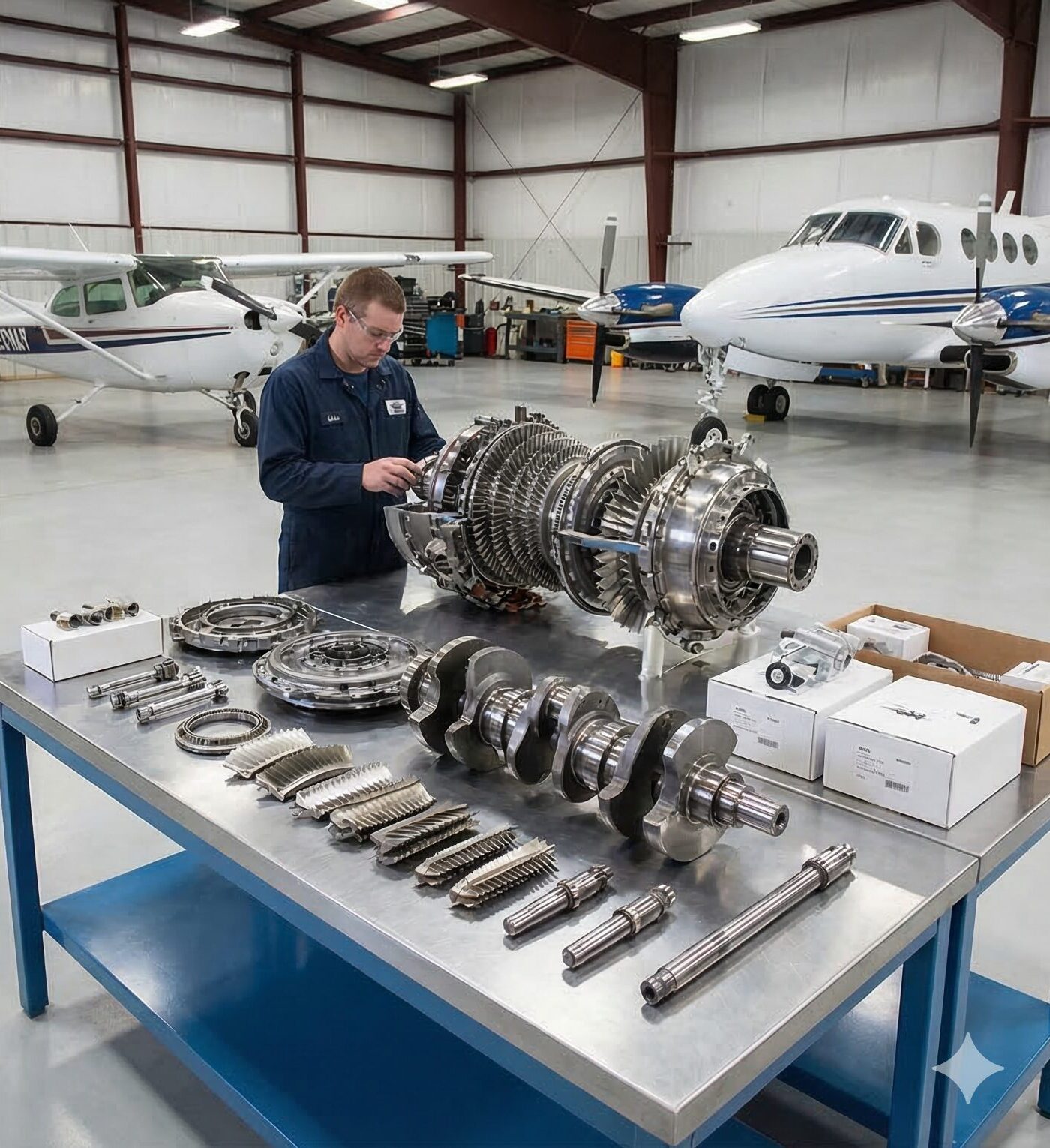
Major Overhaul: This is a complete “zero” hours restoration. The engine is entirely disassembled, cleaned, and inspected. Every part is measured against manufacturer fits and limits. Critical components like the crankshaft are checked for cracks using Non-Destructive Testing (NDT), and life-limited parts are replaced.
-
Top Overhaul: A bit of a misnomer, this is actually a major repair. It involves overhauling or replacing the cylinders without “splitting the case” to look at the crankshaft or bearings. It’s a targeted solution when the “bottom end” is healthy but the “top end” is showing wear.
-
Running “On Condition”: This means continuing to operate the engine past the manufacturer’s recommended TBO based on its actual health and performance rather than a calendar or hourly limit.
The Regulatory Reality in Canada
One of the most common pieces of misinformation in general aviation is that TBO is always a hard legal limit. In the Canadian context, the rules differ significantly based on how you use your aircraft:
-
Private Operators: For non-commercial, small piston aircraft, the manufacturer’s TBO is generally considered a recommendation. Under Transport Canada Standard 625 Appendix C, private owners can often choose to fly “on condition,” provided the engine continues to pass rigorous annual inspections and meets safety standards.
-
Commercial Operators: If you are operating under a Flight Training Unit (FTU) or an Air Operator Certificate (Part VII), TBO is typically a hard limit unless you have a specific, approved escalation program in your Safety Management System (SMS).
Key Factors in Your Decision
How do you know if your engine is a candidate for “on condition” operation or if it’s time to head to the shop? Our team at Brant Aero looks at four primary indicators.
1. Oil Analysis and “Metal”
Regular oil analysis is your engine’s “blood test.” We look for trends—rising levels of chrome, iron, or copper can signal that internal components like rings or bearings are starting to shed material. If you find actual metal flakes in the oil filter, the “on condition” conversation usually ends immediately in favor of a teardown to prevent a catastrophic failure.
2. Borescope Inspections
Modern technology allows us to look inside your cylinders without taking them off. A borescope inspection can reveal exhaust valve burning (the “green eye” of heat distress), cylinder wall scoring, or heavy lead deposits. If the internal “landscape” looks clean, you have a much stronger case for continued operation.
3. The “Calendar” Factor
An engine that flies 200 hours a year and reaches TBO in 10 years is often in much better internal shape than an engine that sat for five years and reached TBO in 20 years. Corrosion is the silent killer of engines. If your aircraft has been inactive in a humid environment, running on condition is risky because internal corrosion can lead to component failure.