
Aircraft Engine Overhaul: Should You Buy New Cylinders or Overhaul Your Existing Ones?
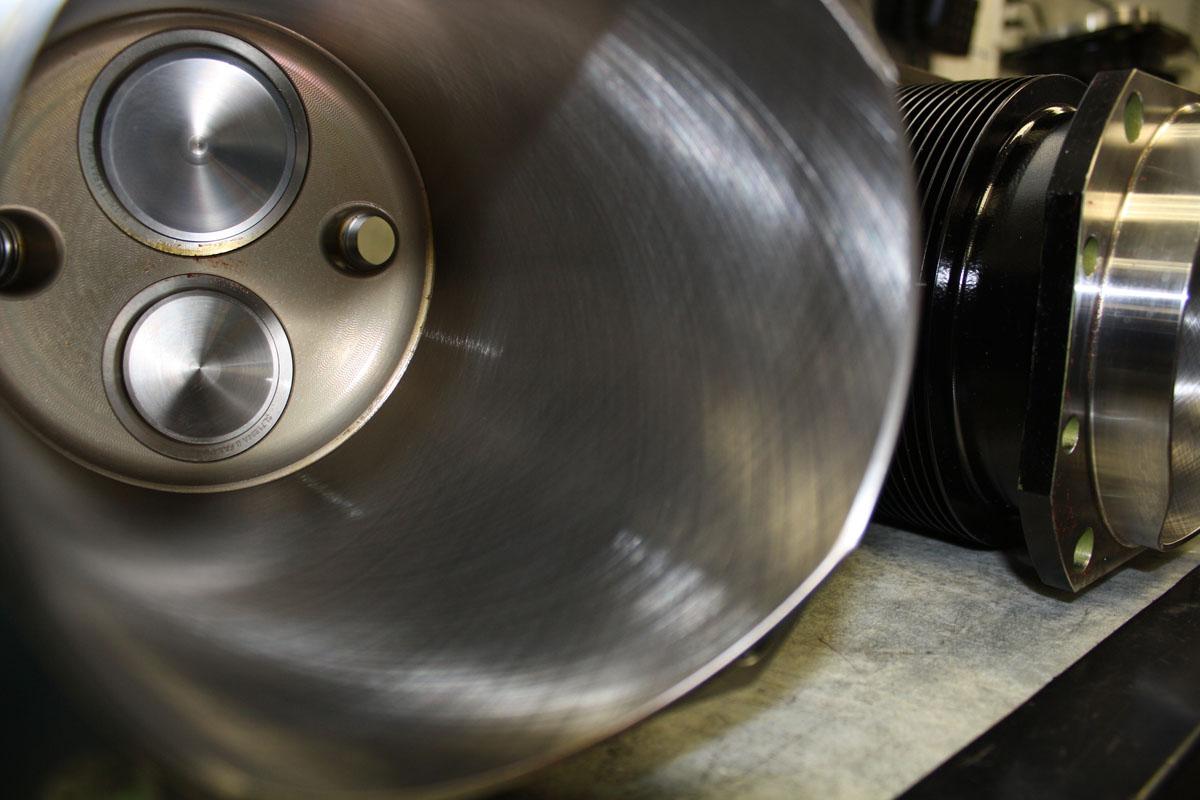
When cylinder work is required during an engine overhaul, or when an individual cylinder needs attention in service, aircraft owners often face a practical choice: overhaul the existing assembly or purchase a new replacement. Neither option is automatically the better decision. The answer depends on the condition of the existing cylinder, the work required to return it to service, parts availability, intended use and total installed cost.
A cylinder that passes inspection and requires only routine reconditioning may be a sound candidate for overhaul. If inspection identifies cracking, excessive wear or substantial barrel and component work, a new cylinder may provide better value. A reliable comparison is made after assessing the actual cylinder, not by assuming one category is superior.
The Core Differences: Overhauled vs. New Cylinders
Overhauled Cylinders
Overhauling an existing cylinder involves disassembly, cleaning, inspection, measurement and replacement or reconditioning of parts as required, in accordance with applicable approved or acceptable technical data and the repair facility’s capabilities. The scope and final cost cannot be established with certainty until inspection is complete.
Depending on findings and the cylinder design, the work may include:
- Non-destructive inspection for cracks and other defects, as applicable.
- Measuring the barrel and evaluating whether honing is sufficient or additional machining or an approved surface treatment is necessary.
- Inspection and reconditioning or replacement of valves, guides, seats and other valve-train components.
- Replacement of applicable wear items and assembly components, followed by the required checks and documentation.
Some cylinders can be restored with relatively little additional work; others may be rejected or become uneconomical once all required repairs are identified.
New Cylinders
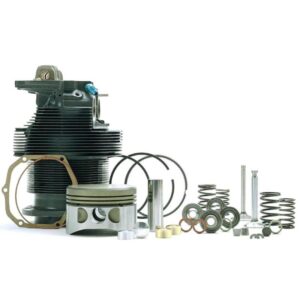
A new cylinder assembly offers unused major components and avoids the uncertainty of evaluating an existing casting or barrel for reuse. However, the package contents vary by manufacturer and part number: a “new cylinder” may be supplied as a bare assembly or as a more complete kit, so the quoted scope must be checked carefully. Availability, lead time, compatibility, warranty terms and installation requirements should all be confirmed.
A new cylinder still requires correct installation, engine setup and appropriate break-in procedures. Being new is not, by itself, a guarantee of trouble-free operation or service through engine TBO.
Overhauling Cylinders: Advantages and Limitations
Potential Advantages
- Potentially lower cost: Where the existing cylinder passes inspection and needs only normal reconditioning, overhaul will often cost less than buying new. As a general planning guide for this article, the difference may be up to approximately 20–25%, but actual quotations and inspection findings govern.
- Retaining serviceable components: There is no automatic technical reason to discard a cylinder head or barrel that is eligible for overhaul and meets the applicable inspection and dimensional requirements.
- Availability for some engines: Overhaul may be particularly useful where new cylinders are difficult to obtain or where an existing assembly has a known service history.
- Choice of approved barrel treatments: Where suitable and available, particular barrel finishes may be selected to address operating patterns and corrosion concerns.
Potential Limitations
- Inspection uncertainty: A cylinder may fail inspection or require more work than initially anticipated. Head cracking or damage outside repair limits can eliminate overhaul as an option.
- Additional barrel work: Oversize machining, replating or other specialized restoration can materially increase the overhaul price. These costs can narrow or eliminate the savings compared with new.
- Turnaround: Inspection, machining, component sourcing and any specialized outside processing can affect the completion date.
Buying New Cylinders: Advantages and Limitations
Potential Advantages
- Defined initial scope: A complete and correctly specified new assembly can reduce uncertainty about the extent of cylinder reconditioning and the risk that an existing cylinder will be rejected.
- Unused components: A new head and barrel do not carry the prior operating history of a reused cylinder.
- Economic alternative to extensive repairs: Where the overhaul requires substantial barrel work or major component replacement, the incremental cost of a new assembly may be relatively modest.
- Warranty: New assemblies may carry a manufacturer warranty, subject to its specific terms.
Potential Limitations
- Higher purchase cost in many cases: If the existing cylinder is readily overhaulable, new may cost more without providing an economic benefit proportional to that difference.
- Supply constraints: New cylinders are not always in stock. Lead times may be longer than overhaul turnaround in some circumstances.
- No guaranteed performance advantage: New cylinders can also experience manufacturing defects, premature wear or operational problems. Compression, oil consumption and longevity depend on more than whether the assembly is new.
Comparison: New vs. Overhaul at a Glance
|
Factor |
Overhauled cylinder |
New cylinder |
|
Initial cost |
Often lower if routine reconditioning is sufficient; additional repairs change the result |
Usually higher than a straightforward overhaul; compare complete installed quotes |
|
Condition assessment |
Subject to inspection, measurements and possible rejection |
Unused assembly; verify the supplied configuration and documentation |
|
Barrel work |
Honing may suffice; oversize machining or replating may add cost |
New barrel supplied to the manufacturer’s specification |
|
Availability / downtime |
Depends on inspection, shop workload and outside processing |
Depends on supplier stock, delivery and installation scheduling |
|
Break-in / oil use |
Depends on finish, rings, installation and operating procedure |
Also depends on finish, rings, installation and operating procedure |
|
Service life |
Dependent on condition, workmanship, use and ongoing maintenance |
Dependent on quality, installation, use and ongoing maintenance |
|
Warranty / documentation |
Confirm repair-shop warranty and overhaul records |
Confirm manufacturer warranty and accompanying records |

Making the Decision: Which Route Is Right for Your Aircraft?
The most useful comparison is between the complete, inspection-informed overhaul estimate and the complete new-cylinder installation estimate. Consider the following:
- What did the inspection reveal? A serviceable head and barrel needing routine work may make overhaul attractive. A rejected head, significant barrel damage or extensive valve-train repairs can shift the economics toward new.
- Does the barrel need oversize machining or replating? These operations may add enough cost that buying new becomes competitive. Ask the shop to identify them separately rather than relying on a single preliminary overhaul price.
- How much life and service is expected from the engine? Consider hours since major overhaul, condition of the rest of the engine, calendar age, anticipated annual flying and the owner’s plans. TBO is not a guarantee of cylinder life, and an engine nearing its recommended overhaul interval does not automatically require an entire new set of cylinders.
- What is actually included in each quote? Compare like with like: cylinder assembly or kit contents, pistons and rings where applicable, hardware, machining, inspection, labour, freight, taxes, warranty and estimated downtime.
- What are the realistic delivery dates? Confirm both the new-cylinder availability and the overhaul shop’s projected turnaround. Either path may be quicker depending on current supply and required work.
- What does current condition monitoring indicate? Borescope results, differential compression, oil consumption, operating temperatures, service history and relevant inspections can help identify the condition of the cylinder and whether repair or replacement is warranted.
A Practical Approach to the Cost Decision
For a cylinder that passes inspection and requires normal reconditioning, an overhaul may be approximately 20–25% less expensive than new as a broad planning assumption. This is not a fixed industry price rule. The difference may be smaller, and significant additional work may remove it entirely. The correct decision should be based on current quotes and the inspection findings for that specific assembly.
For example, if the overhaul requires an additional barrel process, replacement valves or guides, and outside machining, the combined cost may approach that of a new cylinder. In that case, the shop should present both options and explain the trade-offs rather than proceeding automatically with either one.
Engine Care at Brant Aero and ATC
Brant Aero, operating at Brantford Municipal Airport (CYFD), and its ATC engine division can assist owners with cylinder inspection, assessment, overhaul and replacement options as appropriate. Our objective is to recommend a technically suitable, economical solution for each engine, not to favour new components over serviceable existing ones.
The quality of inspection, assembly, installation, engine adjustment, cooling and break-in practices is important regardless of which option is selected.
Ready to Review Your Cylinder Options?
Contact Brant Aero at (519) 753-7022 to discuss inspection findings, repair requirements, availability and the comparative costs of overhauling or replacing your cylinders.